

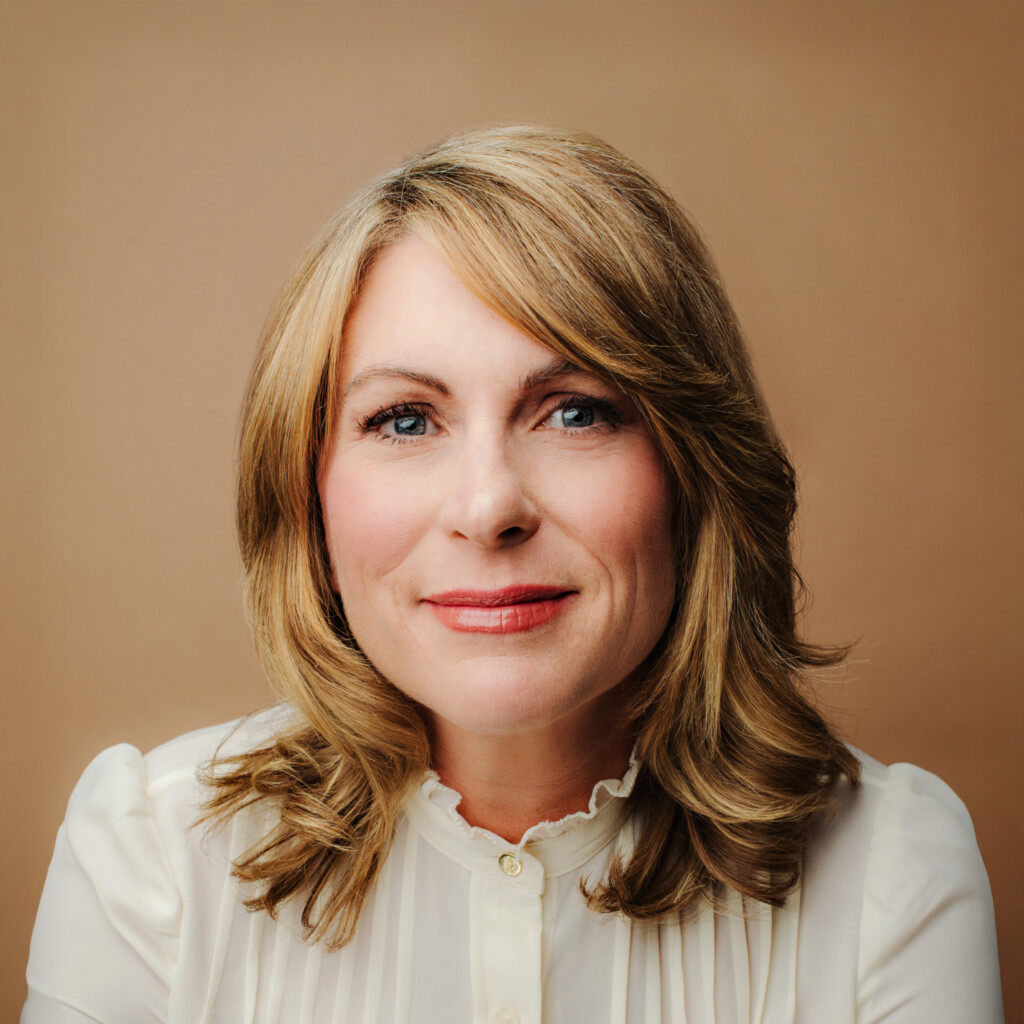
Book Jennifer Moss, Health & Wellness Speaker
About This Speaker
Jennifer Moss is an award-winning international keynote speaker, journalist, author, and strategist whose work helps leaders navigate burnout, workplace culture, well-being, and sustainable performance under pressure. She is the co-founder of the Work Better Institute and is known for helping organizations make sense of capacity, culture, and change in today’s workplace.
Jennifer’s research and insights have been featured in Harvard Business Review, Fast Company, and Fortune. She is also a syndicated radio columnist and co-host of the podcast How To Change Culture in 20 Minutes or Less.
She is the author of three award-winning books: Unlocking Happiness at Work, The Burnout Epidemic, and Why Are We Here?: Creating a Work Culture Everyone Wants. Her latest book, Why Are We Here?, published by Harvard Business Review Press, explores how leaders can build work cultures rooted in meaning, trust, and engagement while navigating rising pressure, capacity constraints, and shifting employee expectations. Jennifer is also the 2026 International Toastmasters Golden Gavel Honoree.
Videos
Speaking Topics: Jennifer Moss
Combating Burnout to Reach Our Goals
This keynote reframes burnout as a systemic capacity issue rather than a motivation or resilience problem. Drawing from behavioral science, global research, and Jennifer’s book The Burnout Epidemic, the session helps leaders identify the root causes of burnout, understand why it is often mistaken for underperformance, and take practical steps to restore capacity without lowering standards or sacrificing results. What Leaders Leave With: - A clear, shared language for identifying burnout without blame or stigma - Insight into the six root causes of burnout and how they show up at work - Understanding of the “Underperformance Myth” and why burnout is often misread - Practical guidance for restoring capacity while maintaining accountability - Tools for supporting individuals and teams at risk without overcorrecting or disengaging
Why Are We Here?: Creating a Work Culture Everyone Wants
This keynote helps leaders understand what has changed in the workplace and what matters now. Jennifer explores how sustained pressure, shrinking capacity, and shifting expectations across a multi-generational workforce are affecting trust, meaning, and performance. The session gives leaders a clearer way to rebuild alignment, energy, and purpose without relying on outdated assumptions or performative solutions. What Leaders Leave With: - A shared language for understanding burnout, overload, and disengagement without blame or diagnosis - Clear insight into what different generations are responding to and why - Practical ways to protect performance while restoring trust and meaning - Guidance for making better decisions when everything feels urgent and resources are constrained - A renewed sense of direction for leaders and teams navigating prolonged change
Jumping the Timeline: Embracing a Future of Work That Isn’t “Normal”
Crises, climate change, sudden remote work, AI, generational displacement, and more – acted as a catalyst that moved us out of our current trajectory and popped us into the multiverse of work. This has been jarring – in most part because of the speed with which the world changed. In the last three years, Gallup finds that younger workers’ FOBO (Fear of Becoming Obsolete) has doubled. Our brains naturally want to stick to old patterns and behaviors but on this new timeline, it’s an unworkable strategy. In this compelling new talk, globally renowned workplace culture strategist Jennifer Moss leverages behavioural and neurosciences research to explain change resistance and how to shift that into a future readiness mindset. Moss dives into new approaches to leadership to motivate and engage individuals and teams in a fundamentally different experience of work. Key Takeaways: Why thinking about the future of work as “the new normal” actually holds us back Understanding the future workforce through the lens of behavioral and neurosciences research What is FOBO and why does it matter? Future competitiveness in a polycrisis – how to build and maintain a healthy and high-performing work culture while global uncertainty and instability persist Finding the goldilocks zone between AI integration and workforce sustainability Tactics to help reduce fears of obsolescence across generations Finding compromise in the remote/hybrid/in-person debate by changing the narrative from flexibility to freedom Easy-to-operationalize tactics for better engagement of remote and hybrid teams Crises, climate change, sudden remote work, AI, generational displacement, and more – acted as a catalyst that moved us out of our current trajectory and popped us into the multiverse of work. This has been jarring – in most part because of the speed with which the world changed. In the last three years, Gallup finds that younger workers’ FOBO (Fear of Becoming Obsolete) has doubled. Our brains naturally want to stick to old patterns and behaviors but on this new timeline, it’s an unworkable strategy. In this compelling new talk, globally renowned workplace culture strategist Jennifer Moss leverages behavioural and neurosciences research to explain change resistance and how to shift that into a future readiness mindset. Moss dives into new approaches to leadership to motivate and engage individuals and teams in a fundamentally different experience of work. Key Takeaways: • Why thinking about the future of work as “the new normal” actually holds us back • Understanding the future workforce through the lens of behavioral and neurosciences research • What is FOBO and why does it matter? • Future competitiveness in a polycrisis – how to build and maintain a healthy and high-performing work culture while global uncertainty and instability persist • Finding the goldilocks zone between AI integration and workforce sustainability • Tactics to help reduce fears of obsolescence across generations • Finding compromise in the remote/hybrid/in-person debate by changing the narrative from flexibility to freedom • Easy-to-operationalize tactics for better engagement of remote and hybrid teams • How to lead in the era of personalization – what does the increasing adoption of niche benefits tell us
How to Optimize an Age-Diverse Workforce in Times of Transformation
Currently there are five different generations coming together at work. Traditionalists, Boomers, Gen X, Millennials, and Gen Z. Up soon? Alphas. The labels are less important than the characteristics that make these generations unique. Boomers are retiring at record rates, Millennials and Xers are working fewer hours, while Gen Zs are disinterested in traditional work roles. All generations are struggling with burnout and disengagement. As a talent shortage looms large, addressing the needs of each group will be critical. For leaders who want to bridge generational divides while ensuring that each group feels heard, award-winning author Jennifer Moss has the answers. Based on her insightful new book, Why Are We Here?: Creating a Work Culture Everyone Wants, Moss unpacks how to better relate to each generations' shifting motivations and mindsets while underlining the importance of belonging and friendships in this current era of loneliness and isolation. Key Takeaways: • The economic and environmental drivers impacting generational attitudes and behaviors • The biggest generational trends changing work (e.g. social media rebellion, retiree exodus, millennial financial well-being, narrowing of executive pipelines for Gen X women, etc.) • Research-backed strategies to reduce ageism in the workplace • How to personalize engagement and retention strategies based on age diversity • Knowing the critical health and employee benefits each generation needs and wants • How to build and foster belonging in an age-diverse workforce
(re)Discovering Happiness at Work
We’ve come through a crisis and for better or worse – it changed us. We gained plenty of skills – how to pivot on the fly, work from anywhere, adopt new tech, build resiliency. We might be feeling hopeful, but we have a long way to go – Gallup says that less than 1 in 4 people are thriving at work. If the dust is settling and our well-being is (re)booting in our personal lives, why does work still feel so “meh”? We feel less confident, less effective, less connected – blame that on chronic stress – but we’re also hungry for purpose and meaning. We want our MOJO back! In her newest keynote offering (re)Discovering Happiness at Work, award-winning author and journalist, Jennifer Moss, will engage audiences with novel ways to bring that lost sense of purpose back to work and life. With the latest behavioral and economic sciences research, Jennifer explains what makes us want to show up at work and how to tear down the psychological barriers that are holding us back. This is a high energy, future-focused, entertaining, data-backed discussion. It will have the audience nodding, “you get me,” while feeling like, “I can do this!” Takeaways Include: • (re)Imagine the Future: How to turn our gaze back to the future and decide how we want to be and what we can accomplish when we do. • (re)Connect Our Diverse Workforce: How to think differently about the multigenerational workforces, Equity Deserving populations, and increasing diversity in our workforces. • (re)Prioritize Autonomy: Understand what flexibility actually means. Why employees care so much about autonomy and how you can use it to create value. • (re)Build Belonging: How and why to invest in belonging, connection, and friendships which are more important than ever, and more difficult to create in hybrid workplaces. • (re)Store Purpose and Meaning: How and Why we need to connect our efforts to purpose and how to begin evolving our employee value propositions.
Reducing Stress and Increasing Engagement in Changing Times
Since the pandemic we’ve been operating in crisis mode. It took 41 percent of the global workforce to resign for us to finally admit, crisis mode may not be sustainable. And yet, here we are in 2023, growth expectations have not slowed, workloads are still unmanageable, and people keep quietly quitting or quitting outright.
The Both/And Strategy: AI Human Potential
The conversation about AI at work has gone bleak — displacement, burnout, disengagement. But the leaders getting this right aren't choosing between AI optimization and human potential; they're building strategies that unlock both. This talk draws on years of deep research I conducted for Why Are We Here? It includes extensive interviews with employees and senior leaders to understand what's actually happening on the ground, combined with novel findings from my work as cofounder of my latest AI startup, Wellbeing OS. The result is a practical, evidence-based framework for using AI to amplify (not erode) what makes people and organizations thrive. It's an optimistic take audiences haven't heard before, and it adapts for executive, HR, and mixed conference audiences in keynote, fireside, or workshop formats. As an added value, every attendee gets free post-event access to my LinkedIn Learning course, From AI Anxiety to Action: A Leader's Guide to AI Readiness, as a follow-up resource — a great way to extend the impact of the talk well beyond the room.
Related speakers



Related news and insights
April 1, 2025 · 4 min. read
Best Canadian Speakers in Healthcare and Environment
Get to know Madison Tevlin, a multihyphenate superstar who defies stereotypes, inspires audiences and sets new standards for accessibility and inclusion.
April 7, 2025 · 5 min. read
Top Health and Wellness Speakers 2025
Celebrate International Women’s Day 2025 with the best female inspirational speakers like Dr. Roberta Bondar and Kate Beirness.

January 25, 2024 · 5 min. read
Keynote Speakers to Watch in 2024
Talent Bureau works with North America’s most influential keynote speakers to provide audiences with the right solutions to their workplace challenges.